
If you want a beach crowded with surfers and swimmers and other sun worshippers to empty out within a minute, cup your hands by the side of your mouth and shout loudly, ‘SHARK’ and wait for this miracle to happen.
Because the very word conjures up images from Steven Spielberg’s movie ‘Jaws’. An image of a gaping mouth with rows of razor-sharp teeth and a greyish white shark thrashing around in murky water, grappling with its catch.
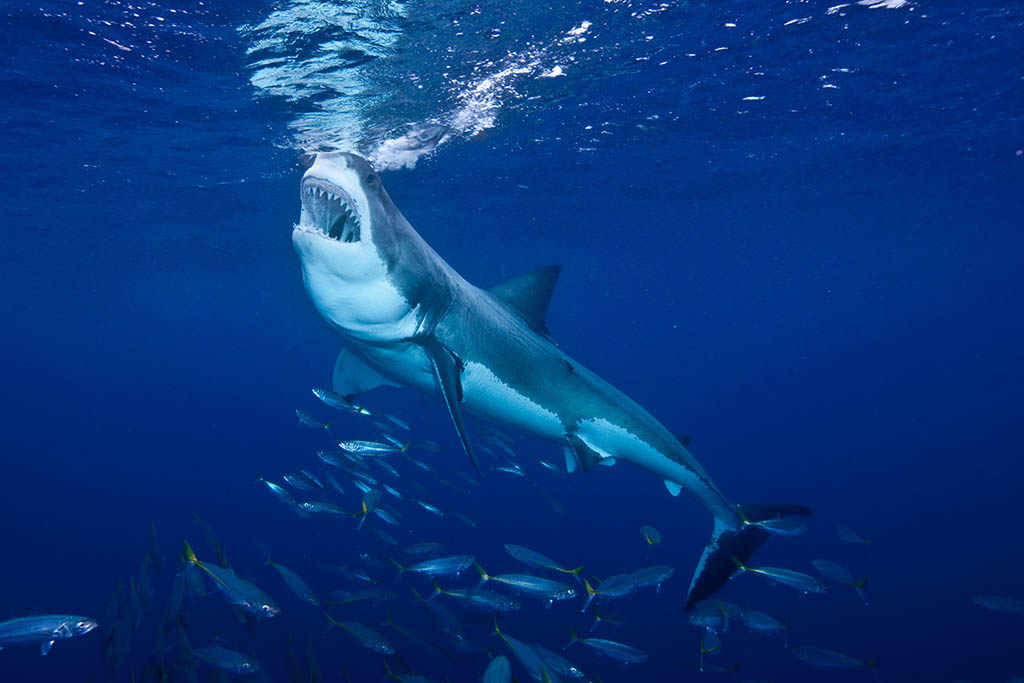
Sharks are the most misunderstood creatures on earth and myths and rumours have spun a web of terror around this predatory carnivore. For centuries people have labelled sharks as man-eaters, lurking undersea for an unsuspecting swimmer to appear. The presence of a shark’s dorsal fin cause waves of fear and panic resulting in bathers and surfers scuttling for shore.
There are about 380 known species of sharks, ranging from 20-centimeter lantern sharks to the massive 12-metre long (but harmless) whale sharks. However, truth is, most sharks are timid creatures. They are curious and may come to inspect you but they are as frightened of you as you are of them.
The diet of great white sharks consists of turtles, seals, penguins, dolphins, and other fish. But sadly enough, the six-metre long Great White shark, has gained notoriety as the most dangerous shark alive today!
So, are sharks really dangerous? The answer is yes and no. There have been attacks on humans by great white sharks but they are not potential man-eaters. Also, they do not spend their time scouring the sea for humans. If they did that, there would be many more fatalities. The fact is, only about one-third of shark attacks have been fatal while in the remaining cases, victims have survived!
Attacks on humans occur only when the shark feels threatened or lacks its usual prey. Most of the times they mistake splashing swimmers (the kicking and thrashing resembles the movements of an injured prey to the shark) causing the sharks to investigate. The panic reaction of frightened swimmers leads to an attack.
Sometimes the presence of blood in water also causes shark attacks. The presence of other sharks at the site excites them to a feeding frenzy. This often causes attacks on each other and injured sharks (regardless of their size) get devoured by the others!
Sharks have an acute sense of smell and hearing. They can detect a drop of blood dissolved in over one million gallons of water. Sharks do not have external ears, instead, sharks detect sound through the hundreds of pores along the side of the shark’s body that are highly sensitive to wave movements, pressure changes and vibrations in the water up to over two kilometres away.
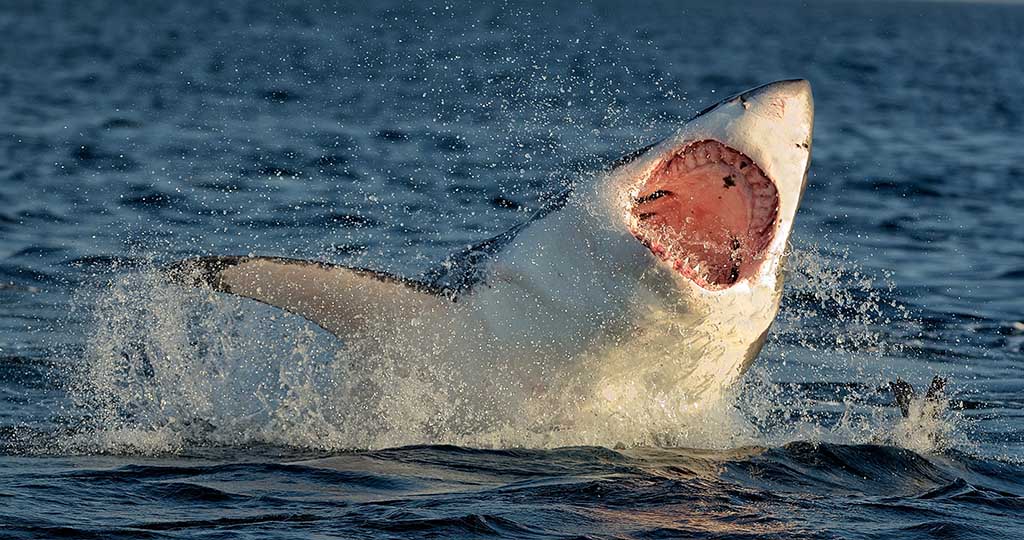
Great white sharks are found in warm coastal waters and have sighted on every continent except Antarctica. The maximum number of great whites are found off the Australian and South African coasts, sometimes coming in very close to the beach.
Adult female sharks reach maturity between 14 and 16 years of age and can reach 7 meters in length. Males generally mature around 10-12 years of age and can grow to over five meters. Female great white sharks are ovoviviparous – which means they hatch eggs inside their bodies and give birth to live young sharks (unlike birds that bear eggs and then hatch them).
The embryo takes just over six months to develop and the mother shark takes another six months to give birth. Baby sharks are born in litters of between seven and nine and they are between 120 and 150 cm long.
Unfortunately, these sharks are commercially hunted. The situation is so drastic that North American biologists recently published a paper (after years of extensive study) stating that great white sharks should be labelled ’endangered’ and stricter measures be taken to protect the species.
Biologists say that great white sharks are in danger of extinction, primarily due to over-fishing, pollution and destruction of their habitat. Also since the great white shark is slow to reach maturity, the number of fish capable of breeding is very less, leading to lowered population growth.
Nobody is quite sure what the real population of great white sharks is, but researchers say that approximately 100 million great sharks are killed each year, many for their fins alone! The dorsal fins are highly relished by the Chinese and shark fin soup is a delicacy in South-East Asia. The fins fetch up to $90 a kilogram in Singapore and Hong Kong.
This hunting and killing of sharks, particularly the great white, has forced the World Wildlife Fund for Nature (WWF) to tag the species as ‘vulnerable’ or critically endangered. This means that they face the risk of extinction in the near future.
So why are sharks hunted? Many humans use certain parts of the great white sharks in rituals, and of course, for food. Almost every inch of the shark is valued. Its liver yields an oil, rich in Vitamin A. The shark’s tough skin is used to make luxurious leather, while the flesh is sold, over the counter, at butcher shops!
Sharks play an important ecological role in oceans. Just like the carnivorous animals on land help in keeping the herd healthy, sharks too prey on sick and weak animals under sea to keep the ocean ecosystem healthy.
And the commercial hunting of sharks has really endangered the life of the creature, which in the longer run can really harm the ocean food chain.
You may also be interested in these:
For the Olympic Heights of Stamina
IMAX the High-Tech Theatre
Jellyfish: Fragile Creature of the Sea
What Kind of Creatures are Sharks?
Jacques-Yves Cousteau