
When couples exchange vows on the marriage day, they generally say ’till death do us part’. For a species of shore-dwelling bird called the Kentish Plover, it is ’till divorce do us part'.
Indeed, birds of this species usually leave their partners after the incubation (hatching) of the eggs and usually it is the female who moves on, while the male stays on to look after the babies. A recent study conducted by Andras Kosztolanyi of the University of Debrecen, in Hungary, sheds light on the reason behind this behaviour.
During his experiments, Kosztolanyi removed both the parents from the nest and found that when one of the parents was removed during incubation, the eggs generally failed to hatch.
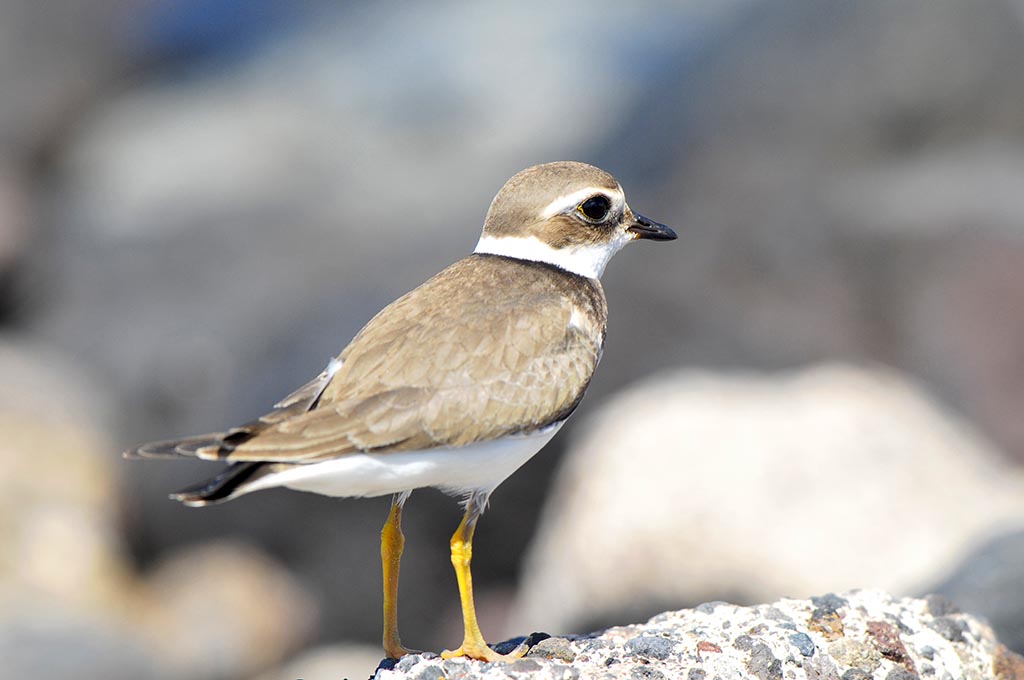
Once the eggs are hatched, however, a single parent is as good at tending the young ones as both do together. This means if one parent deserts after the eggs have hatched, it would cause little problems. But, why would a bird desert its own nest?
Kosztolanyi found out that they do this in order to raise another family. Whether a bird deserts or stays with the family depends on whether it can build another nest or not. This means that the birds may actually build two or more nests in a single season. And the act of deserting one nest and moving on to another is simply an intelligent decision to keep up the population.
However, divorce, or rather separation, seems to be a very delicate decision. A bird decides to leave only after it has weighed all the pros and cons. First, it has to make sure that the other parent will not abandon the nest as well. Secondly, it has to be sure of finding another mate.
The scientists have also found that, often, it is the female who abandons her mate and off-spring. This may be related to the fact that the number of males outnumber the females. It was also discovered that the rate of divorces decline towards the end of the Plover breeding season. This may be due to the fact that by the end of the season, there is hardly any time left to build another nest, so it makes sense to concentrate on raising the existing young ones.
You may also be interested in these:
Golu Rabbit's Day Out
Army Comes to the Aid of Birds
Young Poets
High-tech Crane Migration
The Cool and Cunning Lark