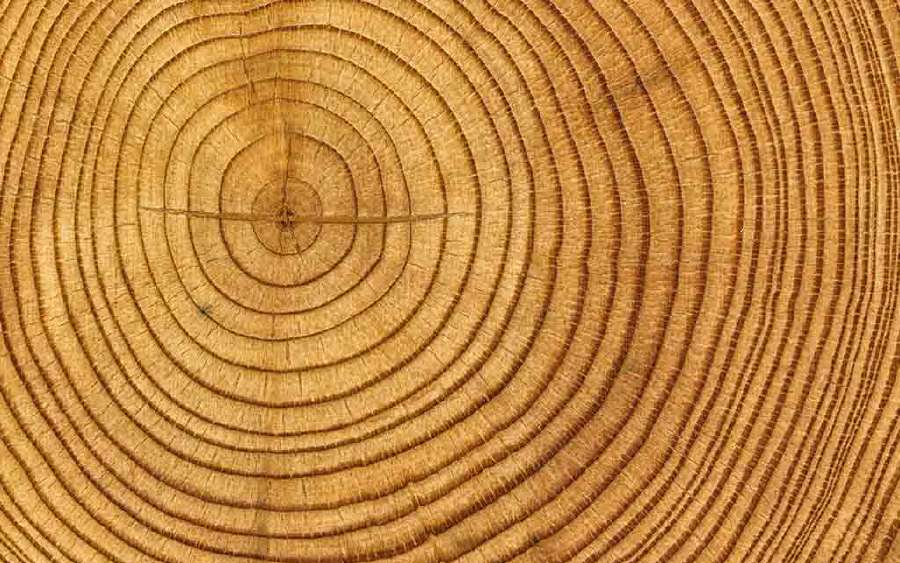
Examining ancient trees helps scientists get an amazing picture of Earth’s life, for trees are a record of their life time. By looking closely at the rings of a tree, scientists can not only tell how old it is; they can also tell you that in one summer in 1453 and again in 1601, there were freak cold spells.
Tree rings, when radiocarbon-dated give a glimpse of certain aspects of prehistoric times. But what is radiocarbon dating?
Radiocarbon dating involves measuring the amount of carbon-14 that remains in a fossil. Carbon-14 is a naturally-occurring material found in the atmosphere. As plants and animals use the air, their tissues absorb some of the carbon-14.
After they die, they no longer absorb the carbon-14 and their tissues start to decay. So, measuring the amount of carbon-14 in the fossil tells us about its age.
Perhaps thousands of years from now, scientists will be able to carry out similar investigations on trees planted today and get some information on the state of pollution. They might claim with reasonable authority, that the amounts of lead in the air decreased as oil became a less common fuel.
Right now, the oldest living tree in the world grows on the White mountains in California. About 4,600 years old, it is nicknamed ‘Methuselah’, after the ancestor of Noah who is said to have lived for 969 years. The age of the tree has been estimated by counting the number of its growth rings.
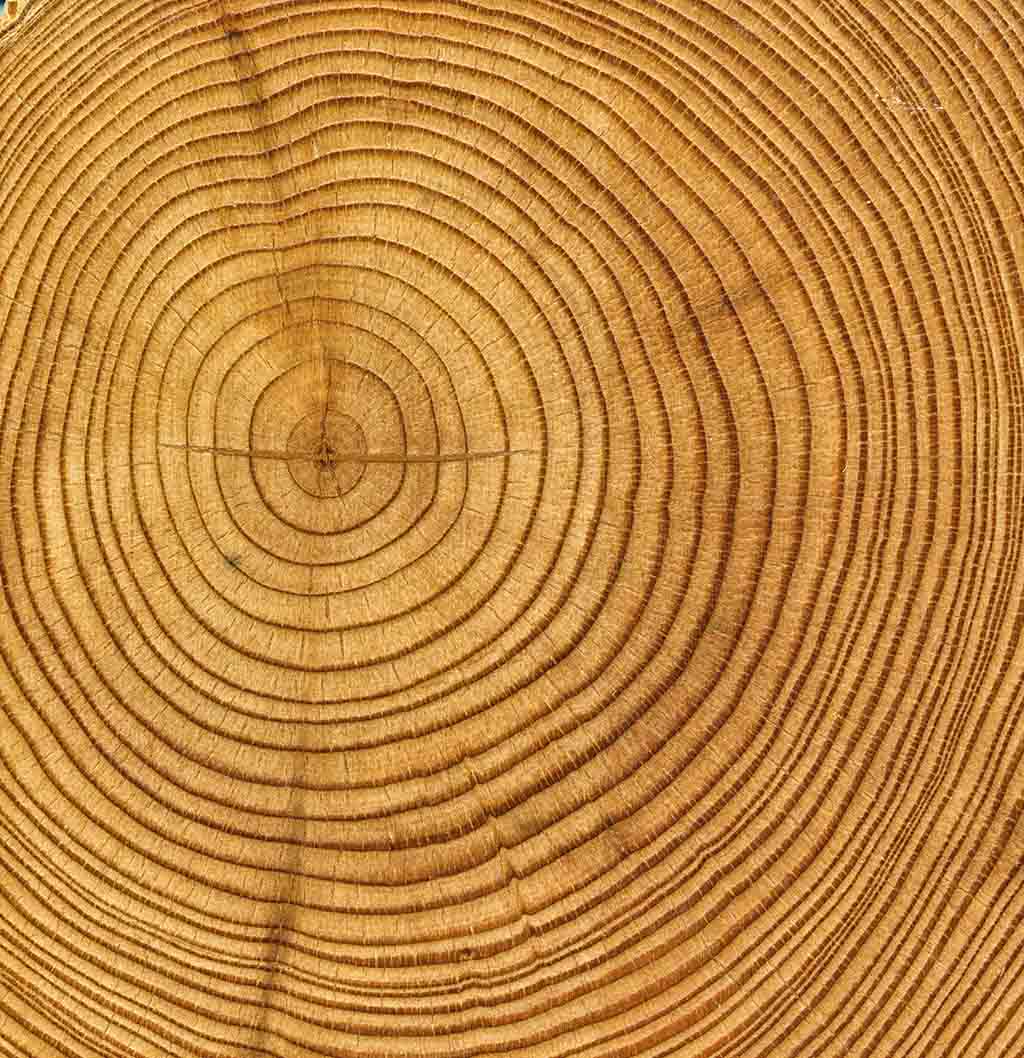
Every growth season, a tree adds a new layer of wood to its trunk. Each ring has two parts – a wide, light part and a narrow, dark part. Tree rings provide clues about the climate, and evidence of disturbance around the tree such as fires and floods.
The shape and width of the annual rings can differ from year to year due to varying growth conditions. In general, wide rings indicate good conditions for growth (plenty of nutrients, water and sunshine).
Narrow rings often indicate less favourable conditions (drought, cold, insect damage, disease, competition and lack of nutrients). If a disturbance occurs after the growth season, it produces a narrow or misshapen ring the following year.
Scientists can use ‘dendrochronology’ or the study of tree time, to learn about past climates by studying the patterns of very old trees. To look at a tree’s growth rings without harming the tree, scientists use a technique called coring.
By drilling into the centre of the trunk with a hollow instrument, called an increment borer, they can remove a long, narrow cylinder of wood called a core sample. The growth rings appear as lines on the core sample.
These interesting facts come from the ‘Woodpecker volume 2000’, an annual compilation on the state of the planet, published by the Academy of Mountain Environics, an NGO based in Dehradun, in north India.
You may also be interested in these:
The Big Meltdown
Roach Sense
Why do Flies have Compound Eyes?
The Girl who Taught the World to Weave
Excerpts From 'The world of trees'