
Do you think chimps are chumps? If the answer is yes, then you are in for a surprise – because chimps or chimpanzees are actually very, very intelligent. Chimpanzees are the most intelligent of the ape family. It was known that chimpanzees use tools intelligently to obtain food. They use rocks to crack open nuts or use sticks to dig the earth for choice insects and termites.
Once a chimpanzee learns a certain method he/she teaches it on to all the other chimps in the area. Scientists say that different groups of chimps follow different customs or styles related to eating, grooming and courtship. So this teaching one group’s ‘customs’ to another group is an act of ‘culturally transmitting a ritual’.
Chimpanzees at the Madrid zoo in Spain are a step ahead. They are now puréeing (mashing) up their food themselves. This has amazed both visitors and researchers alike for this is the first instance of an ape transforming food to improve its taste and quality.
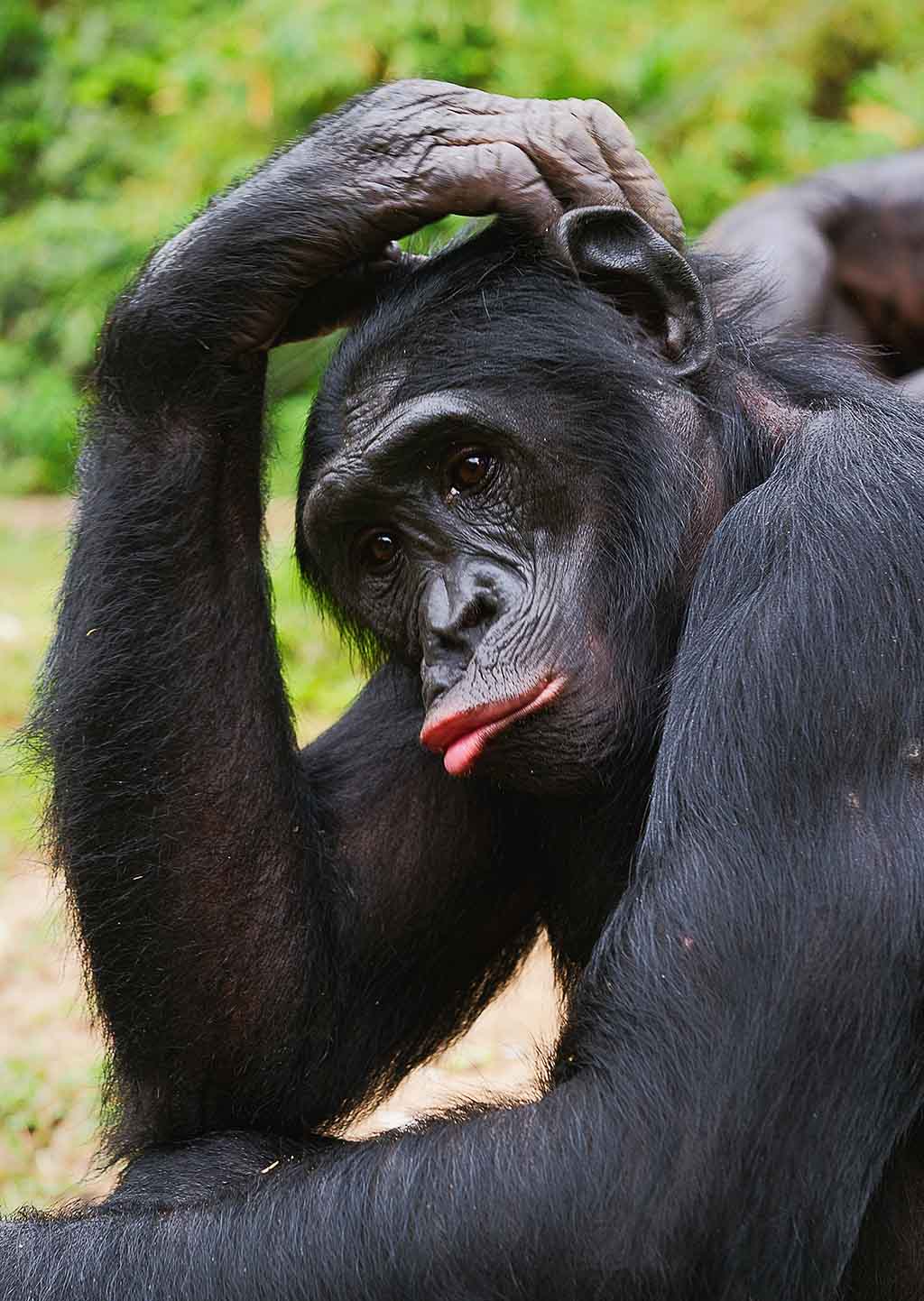
It all started with Linda, a chimp who had lost all her teeth. Linda could only eat mashed up fruits and vegetable as she could not chew her food without teeth. One day, Linda was seen eating hard apples. She first rubbed the fruit against a sharp corner of the wall. Then she licked the mashed fruit bits off the wall. Soon other chimps in Linda’s cage began imitating her unique method of mashing up fruit. The clever chimps now were eatting apples, carrots and oranges the same way.
Primatologists (scientists who study the behaviour of monkeys and apes) agree that chimps are clever in using tools to open nuts and dig up insects. But they have never been known to pulp the food or mash or grind it before eating. Mashing or pulping food changes the quality adding taste and flavour to the food item.
Although chimps are known to have learnt nearly 40 other behaviour methods in this way, researchers are still trying to understand how and where Linda learnt to mash food. Scientists are also not sure if chimps in the wild also mash their food in a similar way.
Most scientists say that only captive animals display such human-like methods because the animals are bored and have the time to experiment. Adult animals, in the wild, cannot afford to waste time – they are too busy searching for a meal. On the other hand, young chimps have time to play around and are therefore, more inventive.
It is amazing how much chimps and humans have in common. Over 90 percent of our genes are similar. Both humans and chimpanzees belong to a group of tropical animals called primates (which include monkeys and apes). Apes can easily be distinguished from monkeys, for they lack tails. Apes are larger than monkeys and have a more complex brain. Apes are also known as hominids – which means humanlike.
Orangutans, gorillas and chimpanzees are known as great apes because they are larger and heavier than the lesser apes like the gibbon. The Orangutan is also the only great ape found in Asia in the islands of Sumatra and Borneo.
You may also be interested in these:
No Monkey Business
Why do Flies have Compound Eyes?
The Boy and the Magic Brush
It's a Beetle's World
The Truth About Bats