We use the ‘Flesch–Kincaid Grade Level Formula’ to present scores as per US grade level. See all the grade levels here. Following articles, stories and features are appropriate for people at reading level of Grade 6 (Age 11-12 years). More information about Flesch–Kincaid readability tests can be found here.
246 items in this section. Displaying page 8 of 25
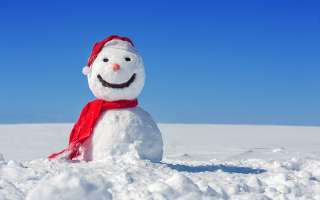
Why is Snow White?
I am sure like my two kids, all of seven and three years, you too may find the cold in Delhi a bit too extreme. It is cold and clammy and some days it is foggy making it dangerous to drive. Some days I would like them to be adequately muffled up in warm winter clothing, while they feel quite comfortable running around in a sweater and shorts! But most days it was grumble, grumble, grumble!...
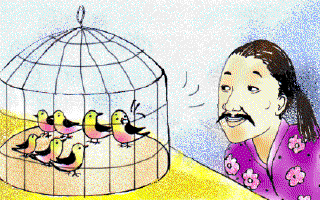
Chinese Sparrows
Once there was a merchant who happened to acquire six sparrows from China. “They’ll make a fine gift for my lord,” thought the merchant. But knowing the lord to be very superstitious and always concerned about omens, he suspected that His Lordship might not like the number ‘six’. In order to make the number a lucky ‘seven’, he added one Japanese sparrow, and presented them in a beautiful cage. The lord was greatly pleased to have such a rare gift....
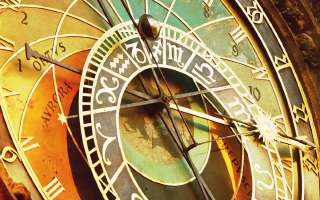
All Human History is Just 10 Seconds Old!
Look at the dial of a clock. Imagine that the 12 hours showing on the dial are equal to earth’s history of four-and-a-half billion years. Now, this is how the earth’s evolution happened… We know very little about what happened in the first three hours of the earth’s existence. The first signs of life appeared in the form of bacteria when the earth was four hours old. Then came the first vertebrates (animals with skeletons). They were born when the earth was 10 hours and 35 minutes old....
Why does a Cricket Ball Swing?
How many times have all of us heard that the former captain of the Indian cricket team, Kapil Dev, was one of the greatest out-swing bowlers of all times. Indeed! He took more than 430 wickets in Test cricket. But, do you know how a cricket ball swings? The term ‘swing’ refers to the movement of the cricket ball in the air after it leaves the bowler’s hand, which takes the ball away from or towards the batsman....
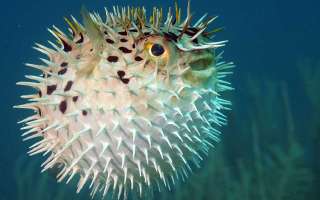
Deception and Mimicry Among Animals to Fool Enemies!
All living beings have enemies. And they all have developed interesting ways to keep them at bay. Some animals hide, others run, or just fly away when faced with danger. These are their defence mechanisms. Some animals can hide without moving. They have the unique ability to change their colour to merge with the surroundings. They become invisible to the predator. This method of defence is called “camouflage”. Some rabbits change colour with the change of season....
Another Big Quake for 2010 – Chile
Where: Santiago,Chile March 17, 2010 : Chile experienced an 8.8-magnitude on February 27, 2010. Around 700 people lost their lives. This was the fifth strongest earthquake recorded in the world since 1900. The quake struck near Concepcion, Chile’s second largest city, where thousands of people were holidaying over the weekend. In neighbouring Argentina, houses and power lines collapsed. There were three tsunami waves that rose at least four metres (13 feet) along Chile’s coastline. By March 12, 2010, there had already been over 300 aftershocks from the quake....

The Colours of Light
A beam of light seems to have no colour. Actually, it is made up of coloured rays. Usually, these coloured rays combine to form the white light. But it is possible to see the different colours at certain times. For instance, when it rains and the sun’s rays pass through raindrops. Since the raindrop has many sides or surfaces, the rays split up into a fanshape of different colours. And we see the rainbow. Violet, indigo, blue, green, yellow, orange and red....
How are Stars Named?
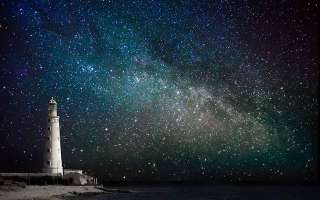
Till now we have only seen roads, railway stations, airports, places etc. being named after famous people. But imagine paying money to get a star named after you. If that can happen, then anything is possible in this world! Well, there are organisations in different parts of the world that sell names for the stars in the sky. All you have to do is – go there, fill out the long, detailed form that they give you and buy star names or name stars after someone....
Do centipedes really have 100 feet?
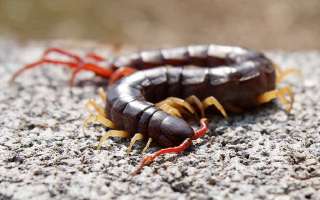
They are called centipedes because it is believed that they have 100 feet. Actually, they don’t. Of the 3,000 different types of centipedes on our planet, none have 100 feet. Some have 50 and some as much as 350. The extremely venomous Peruvian Giant Yellow-leg or Amazonian Giant Centipede. These eat everything from insects to birds! All centipedes have an odd number of body segments, and each segment has two legs attached to it....
Why Don't Spiders Get Caught in Their Webs?
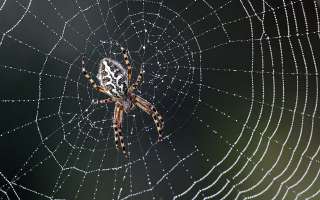
Spiders are not insects but are classified by biologists as arachnids. Arachnids are different from insects as they have eight legs and no antennae. There are over 40,000 species of spiders and some of them build webs while others rely on speed to catch their prey. A spider building its web is extremely fascinating to watch. Some spin these webs by squirting silken threads from modified excretory glands in their body. Each silk gland (some species have up to five) produces a different type of silk....