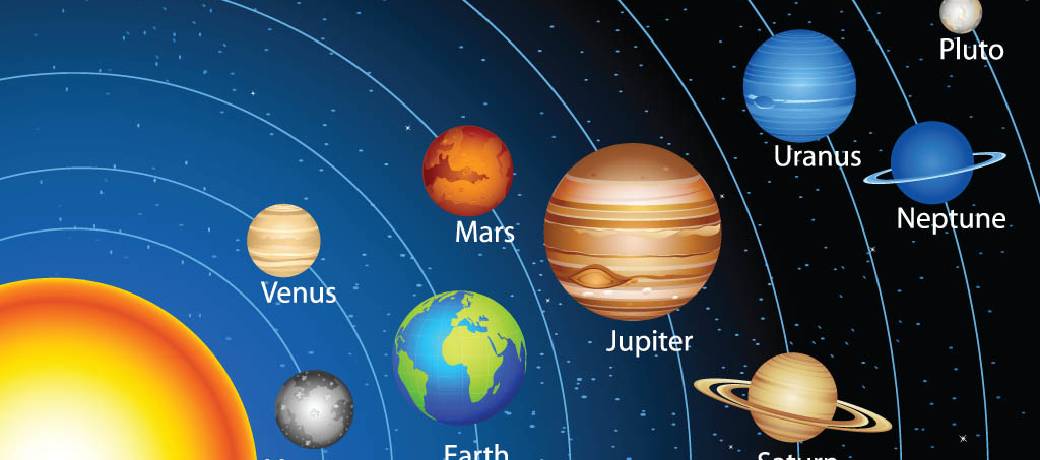
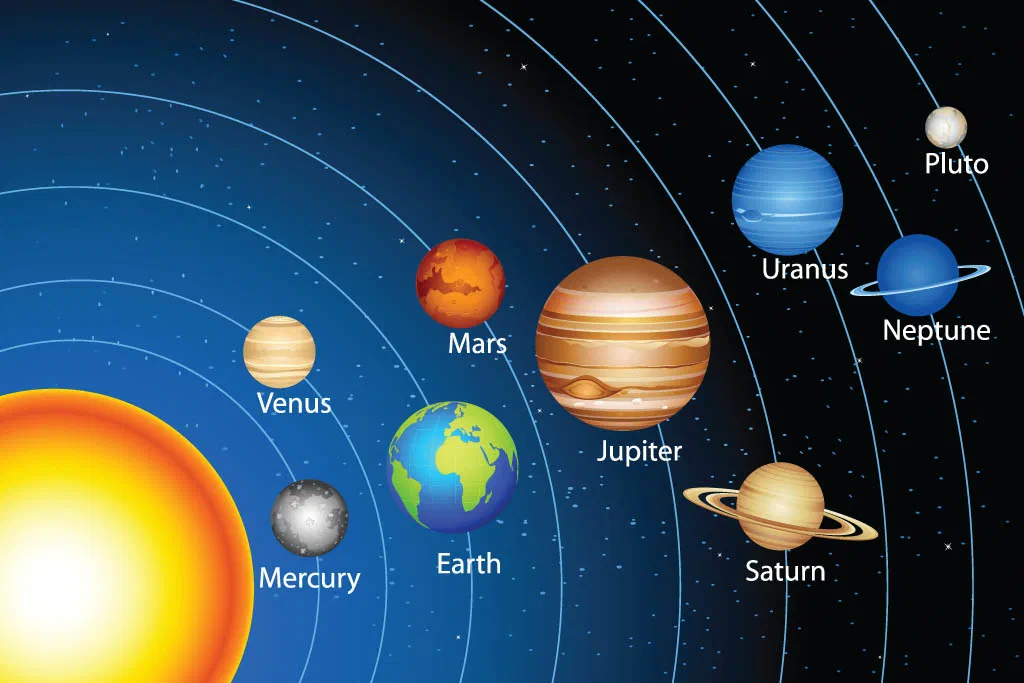
Which is the planet farthest from the Sun? For a long time, the answer was Pluto. Not any more.
In 2006, the world’s astronomers met and agreed on exactly what a ‘planet’ is. Pluto did not fit the new rules, so it was given a new title — a dwarf planet.
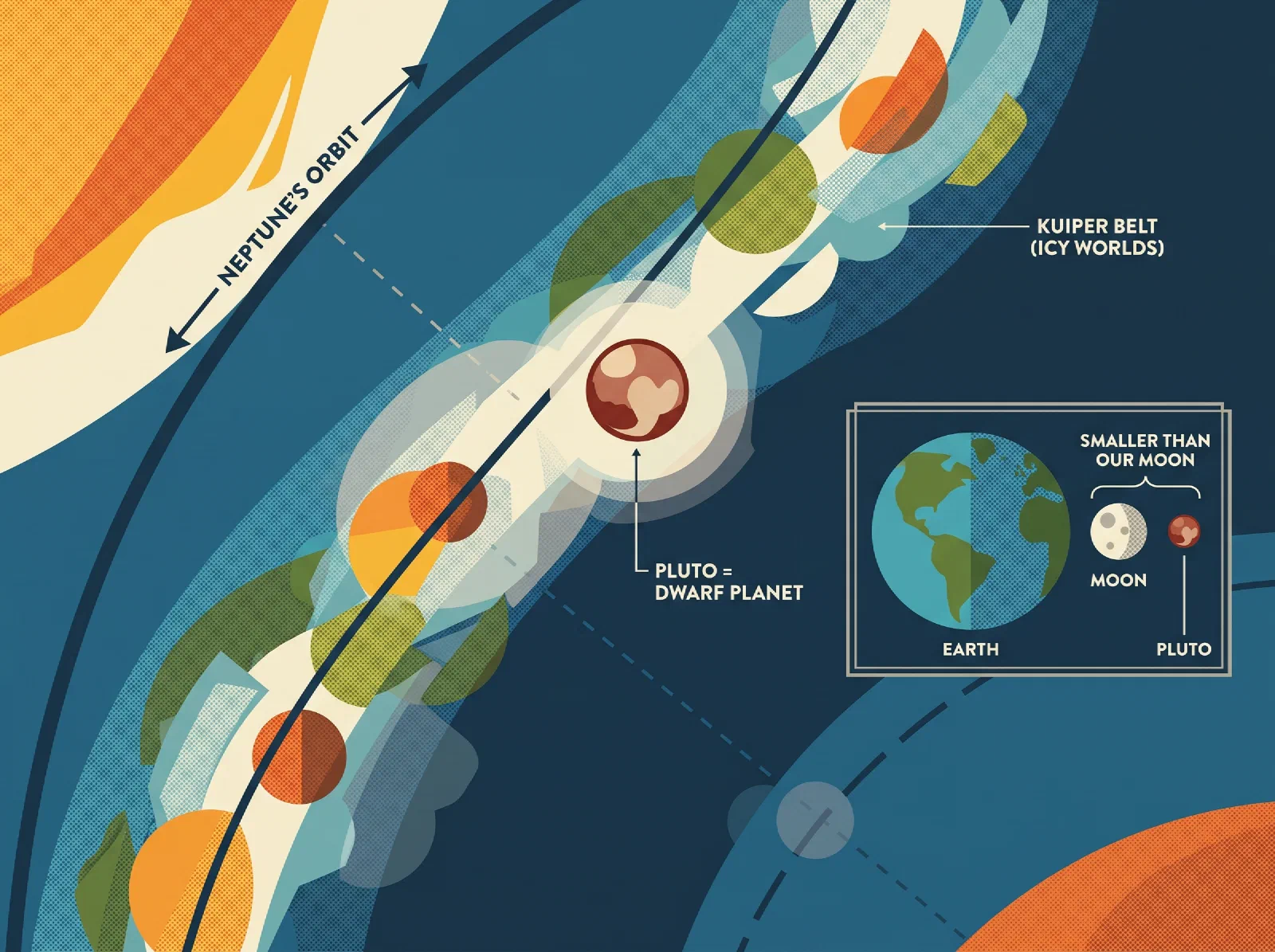
Why the change? Mostly Pluto’s small size. It is only about 2,377 kilometres across — about five times smaller than Earth, and even smaller than our own Moon. Scientists had long suspected that something so tiny did not belong in the club of major planets.
Pluto also has an unusual, egg-shaped (elliptical) orbit. It is so stretched that Pluto crosses the orbit of its neighbour Neptune, spending 20 years of its 248-year journey closer to the Sun than Neptune is.
The Kuiper Belt
In 1992, David Jewitt and J. Luu of the University of Hawaii found a small icy body beyond Neptune, which they named 1992 QB1. Since then, thousands more have turned up — icy worlds made mostly of ice and rock, just like Pluto.
This huge swarm of icy worlds beyond Neptune is called the Kuiper Belt, named after Gerard Kuiper, who first suggested it existed. Pluto, it turned out, is one of the largest members of the Kuiper Belt — not a lonely little planet at the edge of the Solar System.
So today Pluto has plenty of company. It is a dwarf planet, and the king of the icy Kuiper Belt.
Editor’s note: This story was updated in 2026. When it was first written, scientists were still arguing about whether Pluto was a planet. In 2006 they decided it is a ‘dwarf planet’.
Word treasure
- elliptical
- — Not round, but shaped like an egg
- Kuiper
- — A region of icy bodies beyond Neptune's orbit
- dwarf planet
- — A small, round world that orbits the Sun but is not a full planet