Have you seen trapeze artists hanging upside down from bars in a circus? They do it with great concentration.
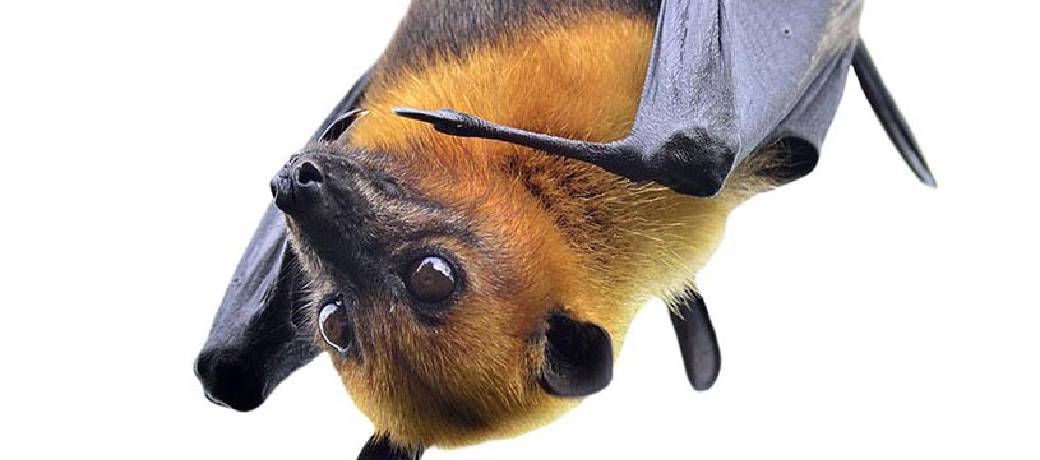
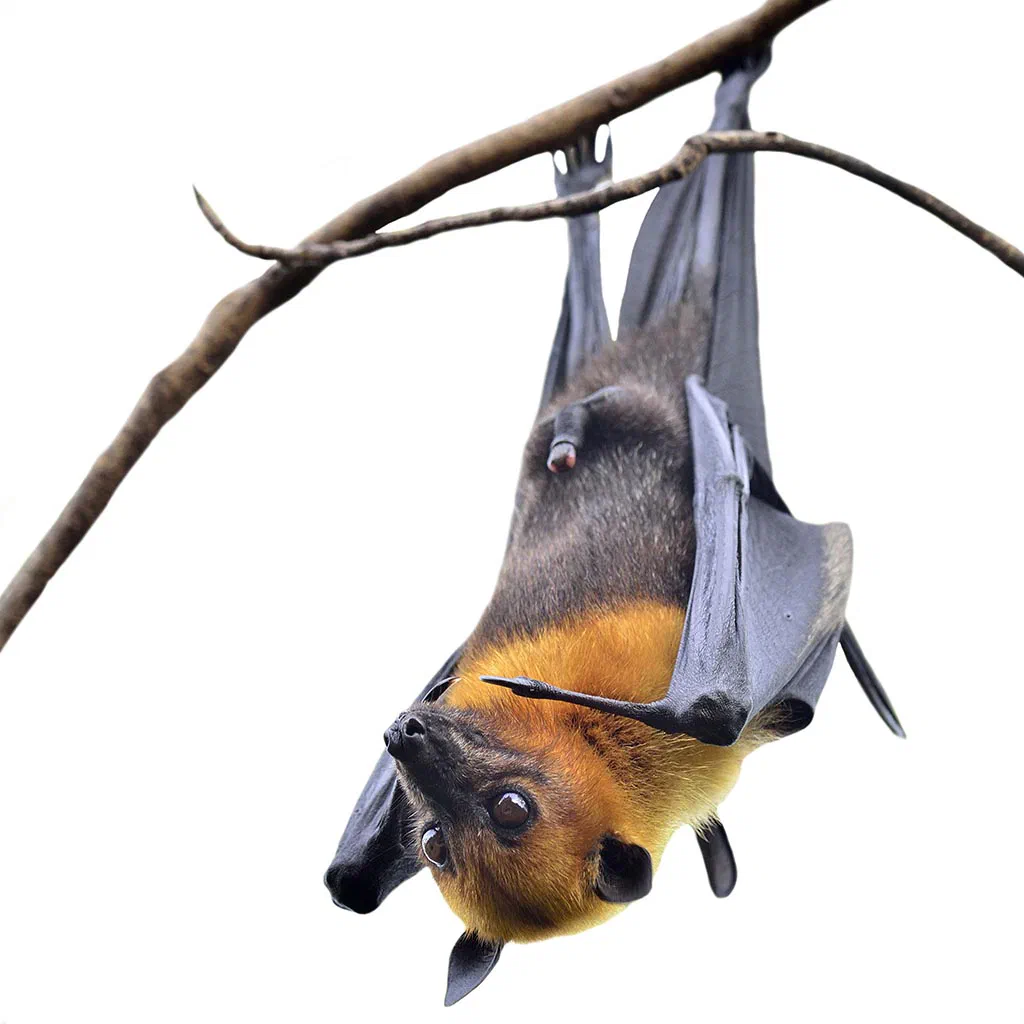
Bats also hang upside down from cave walls or tree branches. And they do not need to put in any effort to do so. For they hang upside down only when they are resting.
They use their legs to hold on to some cracks or crevices on walls or branches of trees. This way, their stretched muscles take the entire weight of the body.
Their legs are so weak that they cannot even walk. When they want to walk, they drag their bodies on the ground.
There was a time when bats could walk. But that was long long ago.
Then they gradually began developing wing-like structures on their limbs which helped them fly.
And now, after all these years of evolution, they have perfected the art of flying. They do it so well that they are, in fact, the only mammals in the world who can fly for long distances without a break.
Their legs changed too, over a very long time. Bats born with light legs — just right for gripping a branch and for pushing off into the air — flew the best, and had young that were light-legged like them. Heavy legs for walking were never really needed. So, little by little, bats ended up with legs that are wonderful for hanging but too weak for walking.
And, now they mainly use their legs to hang upside down when they are resting.
Editor’s note (July 2026): We rewrote the ending. It used to say that because bats ‘stopped using’ their legs, the legs grew weak and stayed that way in their young. That isn’t how evolution works — animals change over many, many generations, as the ones best suited to their lives survive and have babies, not because a single animal stops using a body part.
Word treasure
- concentration
- — thinking carefully about what you're doing
- crevices
- — small cracks or openings in a surface
- evolution
- — a slow change over many generations